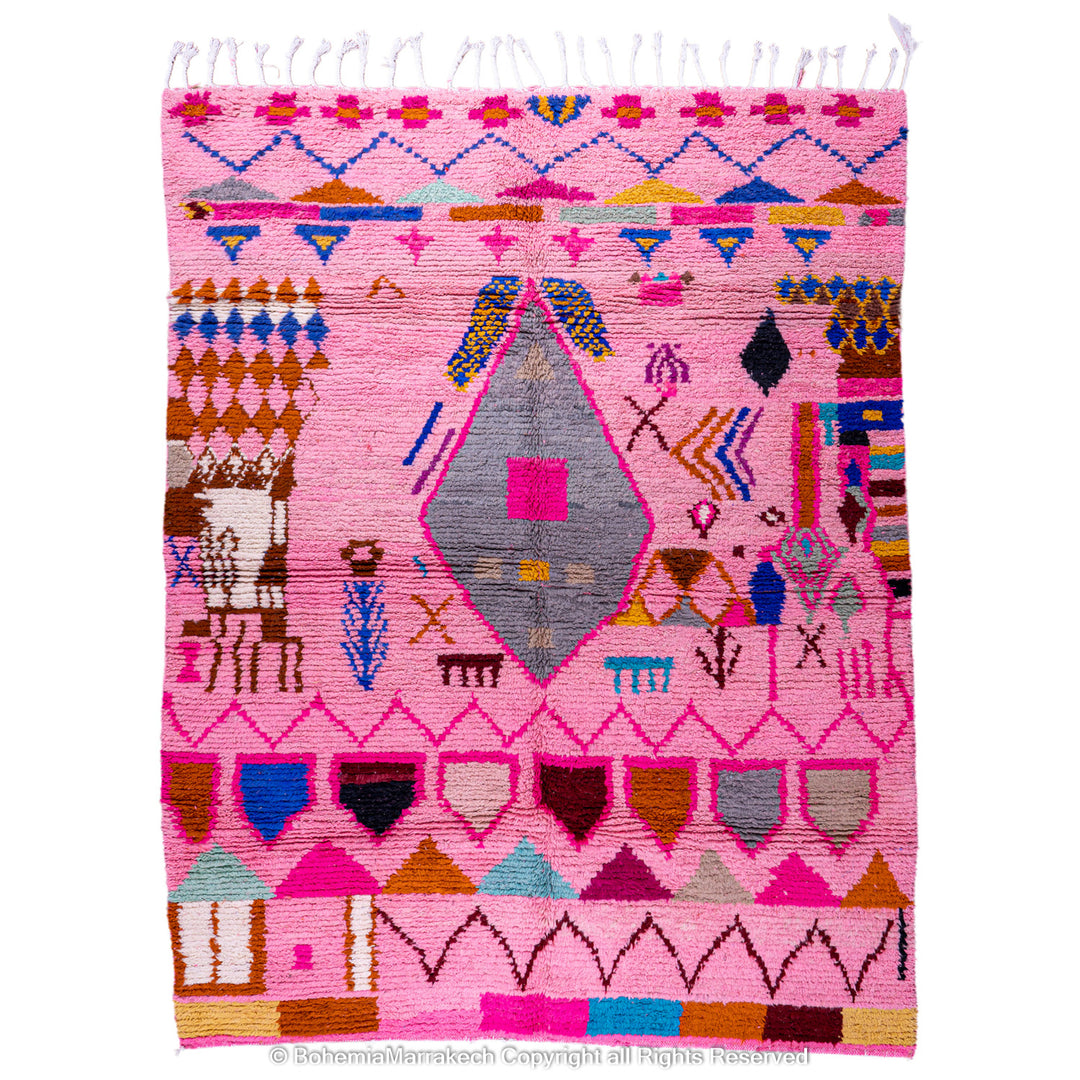
A Moroccan runner rug for an entryway can soften a narrow passage and make the first step into your home feel considered. The right fit depends on the path people walk, nearby doors, and the amount of floor you want visible around the rug.
Measure the walking path
Measure the clear width and usable length of the entry, not just the wall-to-wall dimensions. Leave a visible floor border on each side so the runner does not feel wedged into the hall. If the passage narrows near a door or furniture, use that narrowest point as your practical width limit.
Check the door swing and thresholds
Open every door fully and note the gap between the floor and the bottom edge. The rug and any rug pad must sit low enough for the door to clear without catching. Check closet doors and the main entry door, and make sure the runner does not cover a threshold or create a raised edge in a busy route.
Choose length around the route
A runner usually looks balanced when it follows the main walking line and leaves some bare floor at both ends. In a long hall, a shorter runner can still define the entry zone; it does not need to reach every doorway. Tape the planned outline on the floor and walk the route before ordering.
Match the weave to the use
Entryways collect grit and see frequent foot traffic. Consider how the rug’s pile and texture will feel underfoot and how you will clean it. Use a compatible low-profile rug pad if needed, and vacuum with a setting suitable for the specific construction. Handmade rugs can have small differences in size and edge shape, so check the listing measurements and ask about fit if the passage is tight.
Browse the Moroccan rug collection for runner styles, or see custom Moroccan rugs if you need a particular length. Confirm the final dimensions, thickness, and door clearance with the specific rug before purchase.