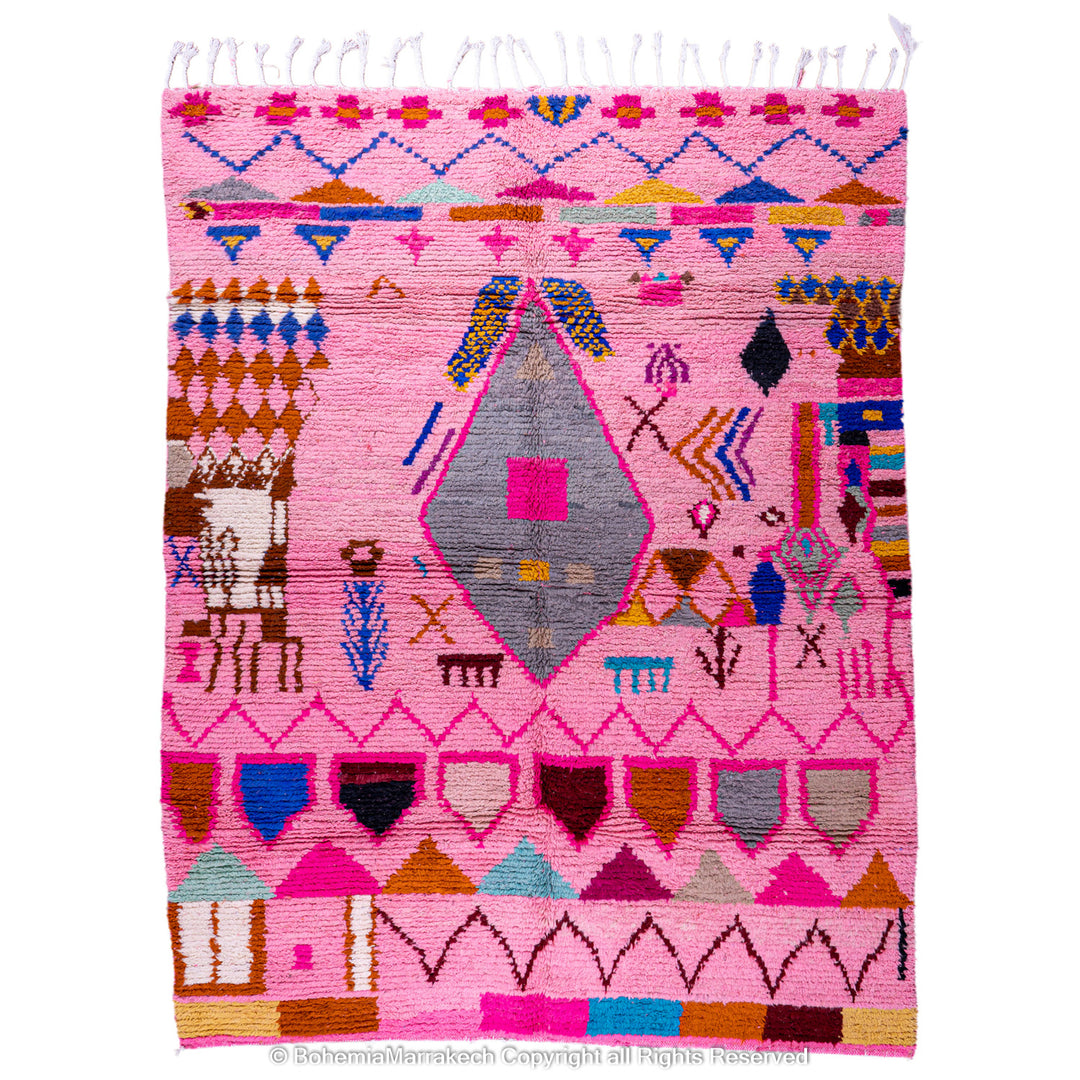
A Moroccan wool rug benefits from regular, gentle upkeep, but the right vacuum setting depends on the rug’s construction. Before cleaning, check the product’s care information and look closely at the pile. A flatweave, a low pile, and a deep pile should not automatically be treated the same way.
Prepare a Moroccan wool rug before vacuuming
Pick up loose items and check the rug for long threads or fringe that could catch in a rotating brush. If the vacuum has adjustable suction or a brush-roll switch, start with a gentle setting. For a longer pile, avoid running an aggressive beater bar over the surface; if your appliance allows it, use suction without a rotating brush. Follow the vacuum maker’s instructions too.
Test the setting in an inconspicuous corner. Move slowly in the direction of the pile, then make a second pass from another direction only if the rug responds well. Do not force the vacuum across fringe or raised edges. If it pulls at the fibers or the pile shifts, stop and use a gentler attachment.
Make the routine light and consistent
Small, repeated passes are usually easier on a rug than one forceful cleaning session. Pay attention to areas where people walk most, but don’t scrub a spot by repeatedly dragging the nozzle across it. For crumbs or dry debris, gentle suction can lift material without wetting the wool.
Know when vacuuming is not enough
Vacuuming removes loose surface debris; it is not a substitute for treating a spill or deep soil. For a spill, follow the care instructions for that rug and avoid harsh chemicals or soaking it. If you are unsure about a stain, a rug-cleaning professional familiar with handmade wool rugs can assess it before you apply a product.
When shopping, read the specific listing for material and construction instead of relying on the broad term “Moroccan rug.” The Moroccan rug collection includes many individual designs, so compare each product’s details and care notes. A gentle test first—and stopping if the fibers catch—helps you keep routine cleaning controlled.