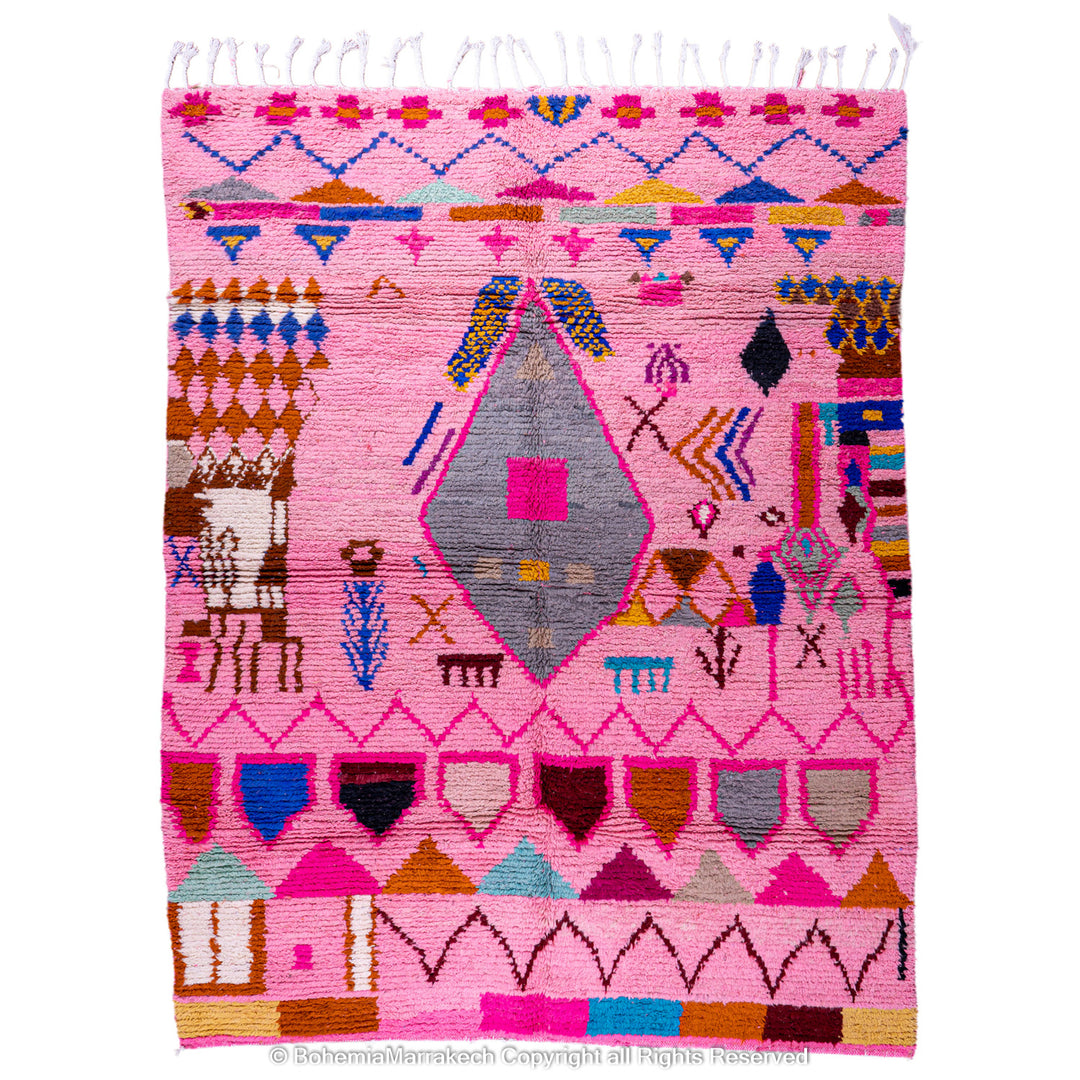
A Moroccan area rug on hardwood can define a seating area and soften the room, but the pad underneath matters. A pad that grips the floor and rug appropriately can help reduce sliding; the wrong material may react with a floor finish. Confirm compatibility with both manufacturers before placing anything down.
Choose a pad for a Moroccan area rug and hardwood
Start with the flooring maker’s guidance. Some finishes require a specific pad material, and certain rubber or adhesive products may not be suitable. Ask the pad supplier whether the product is safe for your exact floor and for a wool rug. If you are unsure, test only as directed in a hidden area before covering a large section.
Trim the pad inside the rug edges
A pad is usually cut slightly smaller than the rug so it does not show around the perimeter. Follow the pad maker’s sizing directions and leave enough space so rug edges can lie flat. A visible pad edge can collect dust or become a trip point, so check the outline after positioning it.
Lay the rug without forcing the corners
Clean and dry the floor first. Lay the pad flat, then place the rug on top and smooth it by hand. Don’t use tape or a strong adhesive on the rug or floor unless both manufacturers specifically approve that product. If a corner curls, check the pad and the rug’s natural settling; do not pin or glue the corner down as a quick fix.
Check again after moving furniture
Furniture can shift a rug as it is moved. After vacuuming or rearranging a room, check that the pad still sits fully beneath the rug and that the edges are flat. Lift the rug occasionally to inspect the floor for trapped grit, moisture, or any change in the finish.
For a new rug, compare the listed dimensions with your floor plan and furniture before ordering. Browse the Moroccan area rug collection, then use the product page’s details to choose the exact piece. The rug and pad work best as a planned pair, with clear compatibility and a clean, flat surface.