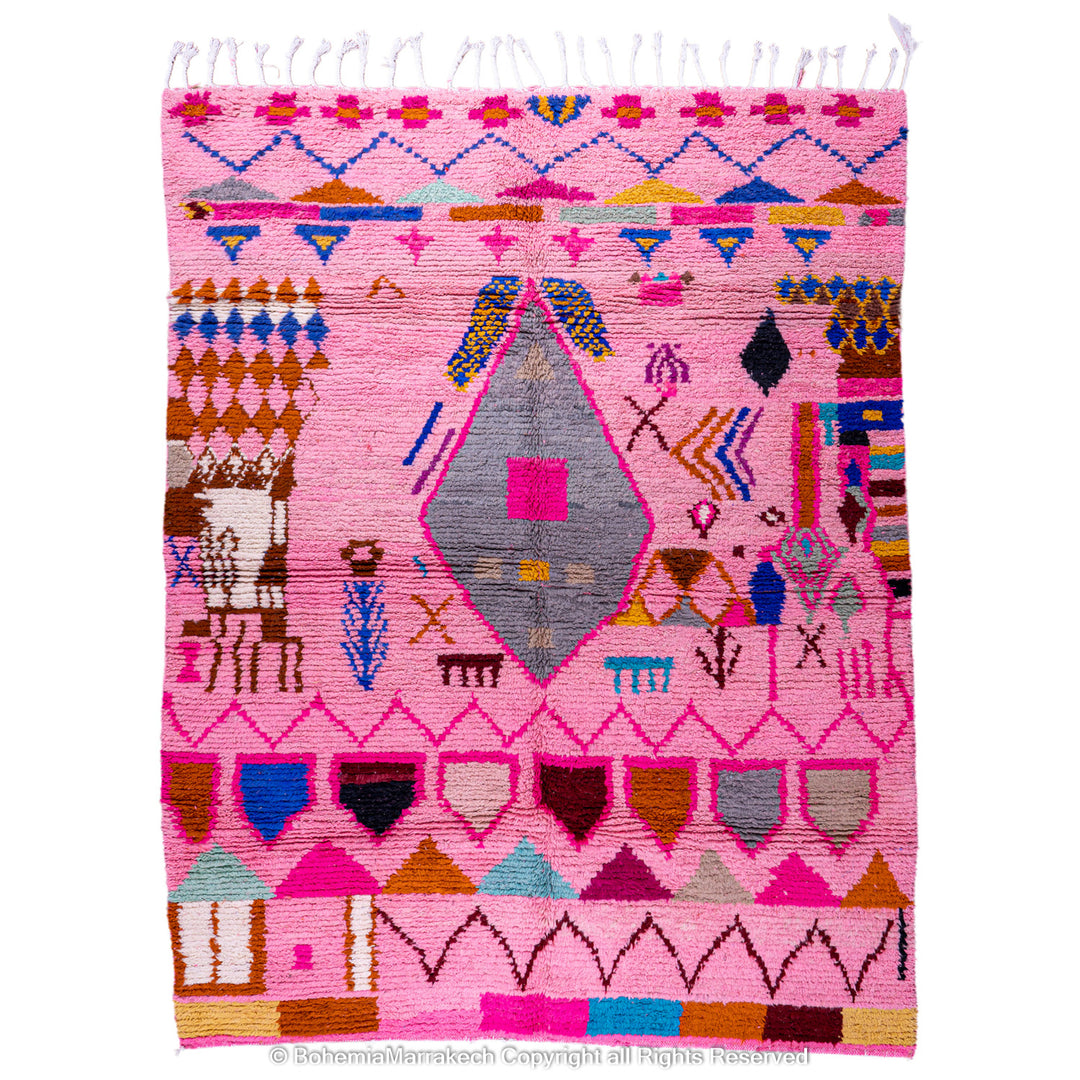
A music room rug can make a listening space feel settled and comfortable. A Moroccan wool rug adds texture underfoot and can soften some reflected sound from a hard floor, but it is not a substitute for speaker setup or acoustic treatment.
Place a Moroccan rug for the listening zone
Start with the seats and speakers. A rug can anchor the listening chairs and table, or define the central area in a room that serves more than one purpose. Leave speaker stands stable on the floor or on purpose-made isolation pads, and keep ports, vents, cables, and equipment access clear.
Choose a music room rug for traffic and comfort
Consider how people enter, sit, and move around the equipment. A rug that extends under the front legs of chairs can make the seating area read as one zone; leave enough exposed floor for chairs to move without catching an edge. Think about pile height in relation to speaker stands and furniture feet, and use a compatible rug pad if the rug needs help staying in place.
What a wool rug can and cannot do for sound
Textiles absorb some high-frequency reflections and reduce the sharpness of footsteps on a hard surface. The effect depends on the room, rug size, construction, and what else is in the space. A rug will not correct bass problems or soundproof a room. Treat speaker positioning, curtains, bookshelves, and acoustic panels as separate parts of a listening setup.
For a calm, low-contrast room, consider a restrained geometric pattern; a more colorful rug can become the visual focal point among dark audio equipment. Bohemia Marrakech’s rugs are handmade in Morocco from natural wool, though individual patterns, pile, and dimensions vary. Browse the Moroccan rug collection and check each listing for its actual construction and size before planning your layout.